Inventing Paradise:
Utopian Visions from Antiquity to AI
The Life Institute | Fall 2026
Fridays, 10 am – 12 pm
This course explores how thinkers, writers, artists, and planners across history have imagined ideal societies and used those visions to critique the worlds they inhabited. Moving chronologically and thematically over eight weeks, the course examines classical foundations such as Plato’s Republic, early modern literary utopias like Thomas More’s Utopia and the Land of Cockaigne, and religious and communal experiments including the Shakers and other intentional communities.
We then turn to artistic, feminist, racial, architectural, environmental, and technological utopias. From William Morris and Charlotte Perkins Gilman to Wakanda, Ecotopia, and contemporary debates about AI futures, participants will consider both the promises and the limitations of utopian thinking.
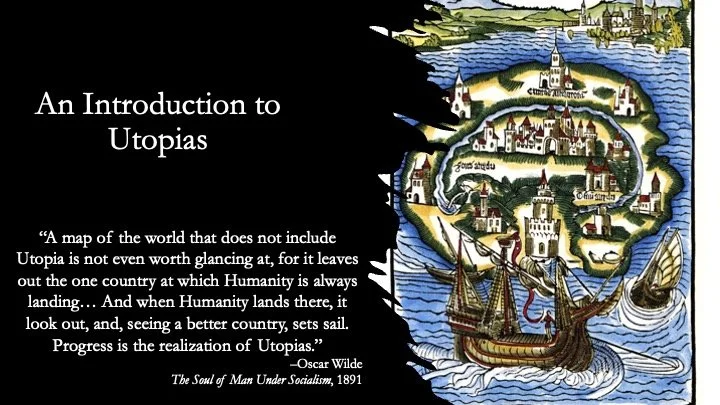
Week 1: An Introduction to Utopias
We begin our series exploring the concept and history of utopia by tracing some of its foundational texts, such as Plato’s The Republic and Thomas More’s Utopia, and how these have produced our understanding of utopias today. We’ll discuss how utopian writers, past and present, have framed their idealistic visions using literary genres such as travel, science fiction, and fantasy. But we will also explore how utopian idealism isn’t just found on the page; we’ll also set the stage for later weeks by exploring the ways in which utopian communities have bubbled up across the world for centuries.
Week 2: From the Page to the Pavement
In our second week, we examine historical efforts to turn literary utopian ideals into reality. We’ll explore early attempts at utopian urban planning through the Renaissance Italian city of Palmanova, a real-life example of Thomas More’s utopian dream. We’ll also discuss the significant influence of later utopian writers. We’ll investigate how these writers inspired Victorian social clubs, planned communities, and political theorists around the globe.
Week 3: Spiritual Versions of Perfection
This week, we investigate the historical development of religious utopian thought by analyzing communities that pursued spiritual perfection through discipline, service, and communal living. We’ll explore the renowned furniture and silverware produced by the Shaker and Oneida communities in the United States, the theocratic urban organization of Japan’s Tenri City, and the harmony of Auroville. We’ll discuss the origins of these faith-based communities and consider the factors contributing to their persistence or decline.
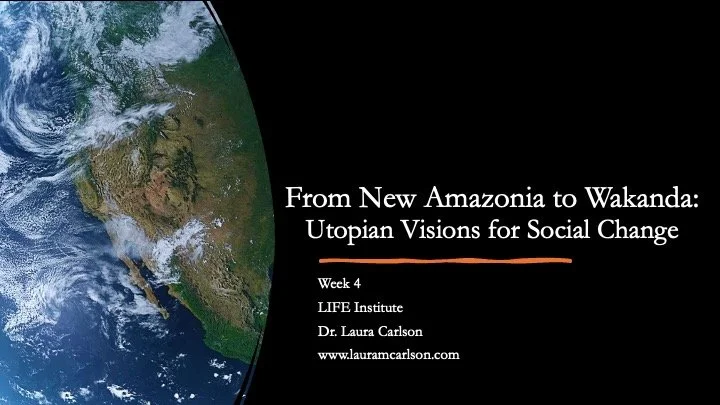
Week 4: From New Amazonia to Wakanda; Utopian Visions for Social Change
This week, we examine utopian thinking and its relationship to social justice, covering historical and current efforts for equality. Both utopian literature and intentional communities have long been used as roadmaps for social change: from Charlotte Perkins Gilman’s advocacy for women’s rights in Herland, to the 1960s’ “hippie” revolution at California’s Druid Heights, to the aesthetics of Afrofuturism, seen through the music of Sun Ra and Solange Knowles or even, more recently, Marvel’s Wakanda.
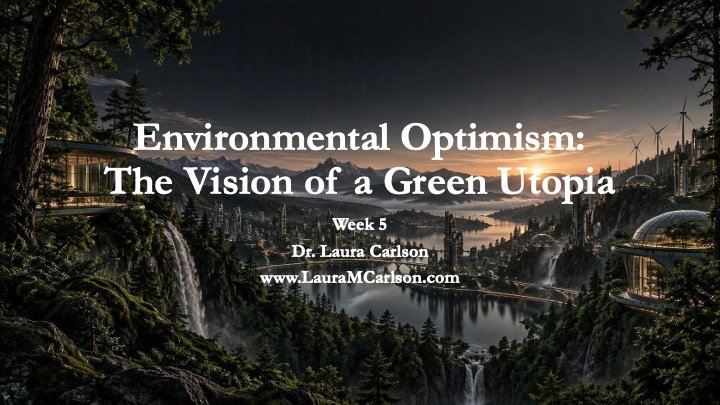
Week 5: Environmental Optimism
As concerns about humanity's impact on nature have increased, writers and thinkers have envisioned a future where people coexist peacefully with the environment. While many environmental utopian dreams began in the 1960s and 1970s during the rise of the environmental movement, early traces can be found as far back as the Victorian era. This week, we'll delve into the rich tradition of utopian literature that explores harmonious relationships with nature. We'll also examine real-world attempts to create ecological utopias, such as Buckminster Fuller’s Spaceship Earth, Scotland’s Findhorn Ecovillage, and Arizona’s Arcosanti.
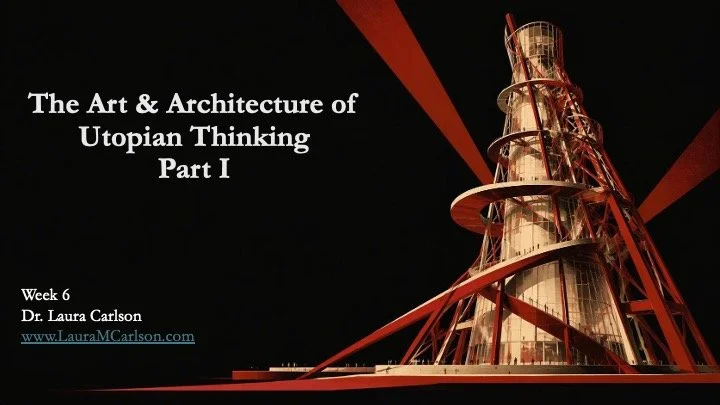
Week 6: The Art & Architecture of Utopian Thinking (Part 1)
What happens when creative minds dare to imagine a perfect world? Discover how visionary artists and architects sought to reshape society through their work. As we near the end of our series, we begin a two-week look at some of the most important movements to come out of the intersection of art, architecture, and utopian thinking over the past two centuries. We will examine how these movements shaped not only artistic expression but also visions for society, offering insights into their lasting impact on culture and design. For our first week, we begin with an exploration of aesthetic schools with significant utopian aspirations, including the Arts & Crafts and the Bauhaus Movements, as well as Russian Constructivism.
Quisque iaculis facilisis lacinia. Mauris euismod pellentesque tellus sit amet mollis.